This week
Curated thinking for the current enterprise AI conversation.
Start with the strongest current article, then move into a visual briefing or executive card depending on how much depth you need.
34 pieces across 18 articles, 5 visual briefings, and 11 executive cards.
Long-form perspectives for enterprise AI, ERP, governance, architecture, and leadership.
Executive visual narratives for fast scanning and meeting-ready discussion.
Quick frameworks, diagnostics, and visual ideas designed to save, share, and reuse.
Try a broader topic, switch to all formats, or clear the search term.
Start with the strongest current article, then move into a visual briefing or executive card depending on how much depth you need.

Presence is not control.
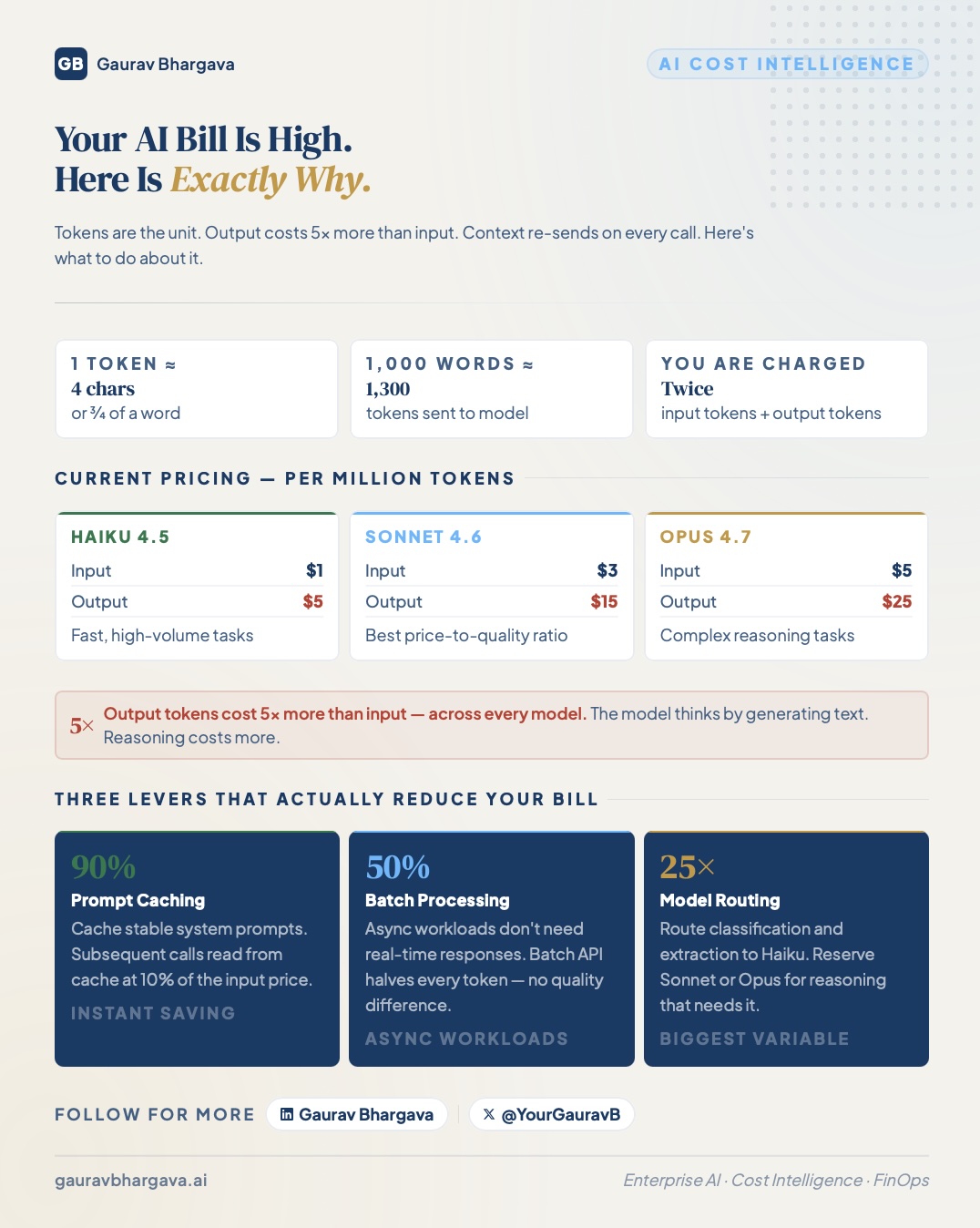
Token economics and cost levers.

Slide-style carousel explainers.
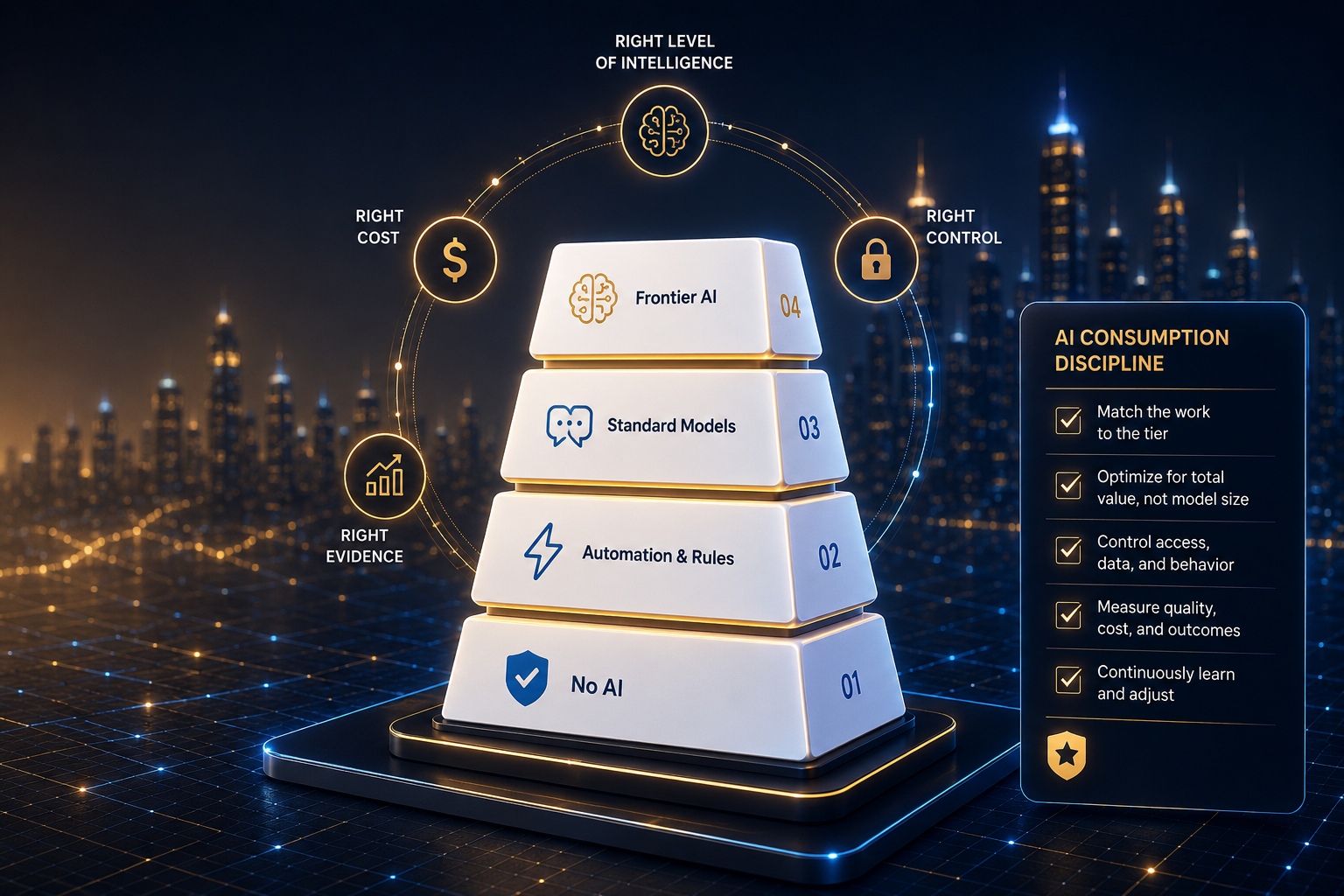
Consumption discipline.
Presence is not control.
Token economics and cost levers.
Slide-style carousel explainers.
Consumption discipline.
Long-form perspectives for deeper reading and durable reference.
One-page visual explainers with context, usage notes, and shareable images for LinkedIn, X, and executive conversations.
Why human oversight only becomes governance when judgment, authority, and accountability still meaningfully affect the outcome.
Why accountability matters more than autonomy once AI starts participating in enterprise work.
Enterprise AI is moving from adoption to consumption. Leaders now need workload routing, model selection discipline, cost visibility, and governance at the point of use.
AI-era ERP delivery requires more than faster test creation. It requires continuous assurance of business outcomes, controls, integrations, data, and AI-enabled behavior.
AI is weakening the trust signals enterprises use to decide what looks legitimate, what deserves confidence, and what should trigger action.
AI systems are inheriting access and authority across enterprise workflows — but identity controls and segregation of duties have not caught up.
A framework for maintaining human oversight and accountability as AI scales across enterprise operations.
AI delivers early wins in ERP pilots. Scaling it exposes how decisions, data, ownership, and governance actually operate across the enterprise.
A control-led view of where RAG, copilots, and agents actually belong in sensitive Finance and HR workflows.
A decision-integrity view of AI in ERP: where governance, data, integration, inference, and execution must align before AI-influenced transactions scale.
AI is not introducing risk. It is operationalizing it — exposing whether enterprise governance actually works under load.
A strategic view of how consolidation creates operational clarity while quietly reducing future maneuverability.
Why structural sprawl quietly erodes resilience, capital, and enterprise velocity.
Architecture under ambiguity: how enterprise systems can absorb evolving strategy without locking the organization into premature certainty.
Why influence, incentives, and timing shape architectural outcomes more than diagrams do.
AI is compressing tactical architecture work and making structural foresight, governance, and trade-off judgment more valuable.
Why architecture influence is measured by trade-offs, not technology.
A reflection on decision framing, enterprise risk, and the evolving role of architecture in the age of AI.
How leaders move AI from pilots to controlled, defensible, repeatable enterprise use.
How platform choices, integration patterns, dependency, optionality, and complexity shape enterprise execution.
A shorter executive path through identity, workflow authority, and AI-enabled exposure.
What changes when copilots and agents interact with finance, HR, procurement, audit trails, and enterprise workflows.
A guided route across AI, ERP, data, architecture, control, and the operating questions that matter to technology leaders.
A visual carousel on matching the right intelligence pattern to the right kind of enterprise work.
A one-page executive card showing how AI demand should move from idea to measured enterprise value.
A readiness diagnostic for SAP autonomous enterprise foundations, from clean core to runtime governance.
A myth-vs-reality executive card explaining what SAP and Anthropic mean for Joule agents and SAP customers.
A four-stage maturity ladder showing how finance AI moves from assistance to AI-native finance.
A one-page card showing why finance AI is moving from general chat to agent-ready work.
A one-page executive card explaining why AI bills rise and which levers reduce spend.
A one-page executive card showing common human oversight failure modes and what real oversight requires instead.
A self-assessment card for testing whether AI approval workflows provide real oversight or only procedural comfort.
A practical guide card for turning human-in-the-loop from a policy phrase into a working governance model.
A concise executive card explaining AI concepts that matter for enterprise leadership, governance, and operating decisions.
A one-page map of how agent sprawl emerges when agents multiply faster than governance, ownership, and runtime controls.
Explore related briefings, guides, and articles on enterprise AI, ERP risk, architecture, and technology leadership.